

A well-stocked emergency kit is the very foundation for ensuring you and your family can manage during the first, often most critical, days of a societal crisis. It is quite simply about securing the most basic needs: water, food, warmth, and information when everything we take for granted suddenly stops working. A good kit doesn't just provide practical tools; it provides an invaluable sense of security and control.
Why your home preparedness starts with an emergency kit
Preparing is not about imagining doomsday scenarios. On the contrary, it is a practical and completely reasonable insurance policy for an uncertain future. Our modern society is incredibly efficient, but also vulnerable. A prolonged power outage, a cyberattack on essential systems, or extreme weather can quickly paralyze our daily lives.
In less than 24 hours, store shelves can be completely empty. Transportation can grind to a halt, and tap water can stop flowing. It is precisely in these situations that a well-thought-out emergency kit goes from being a "nice-to-have" item to being absolutely crucial.
The principle of responsibility – your own responsibility in a crisis
Swedish crisis preparedness is built on a simple but important foundation: the principle of responsibility. In plain language, this means that you as an individual are expected to be able to take care of yourself for a limited period – at least 72 hours, but MSB (The Swedish Civil Contingencies Agency) recommends preparing for an entire week.
When a crisis strikes, government resources will go to the most vulnerable. For most of us, this means we must rely entirely on our own home preparedness.
This becomes extra clear when looking at Sweden's vulnerability. Did you know that over 50 percent of all the food we eat is imported? Our food supply chains are long and sensitive to disruptions. Stores have small inventories that often only last about a week. This makes your own preparedness a critical piece of the puzzle in the country's total defense.
From thought to action
Building an emergency kit is more than just buying gear. It’s about developing a mental readiness and knowing what to do when the unexpected happens.
- Cover the basics: Ensure your kit covers the four most important areas – water, food, warmth, and communication.
- Tailor it for you: Think through your own situation. Do you have small children who need formula? Pets that need food? Or someone in the family who is dependent on medication?
- Knowledge is power: Supplement the kit with knowledge. Having the right survival equipment and actually knowing how to use it is just as important as owning it.
Being prepared is not about expecting the worst. It’s about giving yourself and your family the best possible conditions to handle the unexpected. See it as an investment in security and independence.
Secure water and food for at least one week
Water and food are the very core of your emergency kit. Without them, the rest matters less. Don't overcomplicate it at first – your primary goal is to secure enough clean water and energy-rich food to last at least a week, but feel free to aim for longer.
The Swedish Civil Contingencies Agency (MSB) recommends three liters of water per person per day. This amount should cover both what you drink and basic hygiene, such as washing your hands. For a family of four, that means twelve liters per day, which adds up to a total of 84 liters for a full week. It may sound like a huge amount, but it is a vital margin when it truly matters.
The image below highlights why your own stockpile is so critical – our modern society is vulnerable.

The numbers speak for themselves. When half of our food is imported and stocks are low, the responsibility falls on you and me to bridge those first, crucial days.
Practical water storage
The absolute simplest way to start is by buying sturdy water containers. Choose containers that are food-grade and stackable, as this saves a lot of space. Another smart trick is to fill regular, well-cleaned PET bottles with tap water. Just remember to rotate the water about every six months to ensure it stays fresh.
To truly secure access in the long term, a water filter or water purification tablets are an excellent investment. This allows you, in principle, to take water from the nearest lake or stream and make it completely safe to drink. It provides you with an almost endless source of water, provided you have access to one nearby.
Build a smart food pantry
When it comes to food, think about two things: calories and shelf life. The goal is to get enough energy to manage a stressful situation. Canned goods, pasta, rice, and freeze-dried food are perfect choices.
But don’t forget the mental aspect! Items like coffee, tea, or a bit of chocolate can work wonders for morale when things feel tough.
A classic trap is stockpiling food that you would never normally eat. Make sure your emergency kit contains food that the family actually likes. This lowers stress levels and makes a difficult situation feel a bit more normal.
The best food storage is the one you actually use in your everyday life. By following the "first in, first out" principle, you ensure that nothing expires. Use a can of crushed tomatoes from your storage for dinner, and buy a new one the next time you shop. This way, you rotate your stock naturally.
Think one step further: how will you cook the food? Without electricity, neither the stove nor the microwave will work. A camping stove is therefore indispensable for your home preparedness. It is small, efficient, and ensures you can boil water and cook a warm meal no matter what happens. If you want to know more, we have a complete guide on choosing the right camping stove for your specific needs.
To make it all more concrete, we’ve put together a simple checklist.
Checklist for food and water in the emergency kit
Here is a practical overview with recommended amounts and concrete examples of what you might need for one person, for both 72 hours and for a full week.
| Category | Recommendation per person (72h) | Recommendation per person (1 week) | Examples of products |
|---|---|---|---|
| Water | 9 liters | 21 liters | Water containers, filled PET bottles, water filters, purification tablets |
| Carbohydrates | 1.5 kg | 3.5 kg | Pasta, rice, oatmeal, powdered mashed potatoes, crispbread, noodles |
| Protein | 3-4 cans | 7-10 cans | Canned fish (mackerel, tuna), meatballs, beans, lentils, pea soup |
| Fats | 1 tube/small jar | 1-2 packs | Squeeze cheese, peanut butter, nuts, rapeseed oil |
| "Morale Boosters" | Optional amount | Optional amount | Coffee/tea, chocolate, dried fruit, energy bars, juice/cordial |
This list is an excellent starting point. Adapt it to your own and your family's preferences so your stock is both functional and appreciated when it is truly needed.
Keep warmth and darkness at bay without electricity
A prolonged power outage in the middle of a cold Swedish winter is a scenario that quickly goes from uncomfortable to outright dangerous. When the power goes out, it's not just the lights that die – the radiators get cold and darkness sets in fast, even indoors. Having a well-thought-out plan for warmth and light is therefore one of the most critical parts of your crisis preparedness.
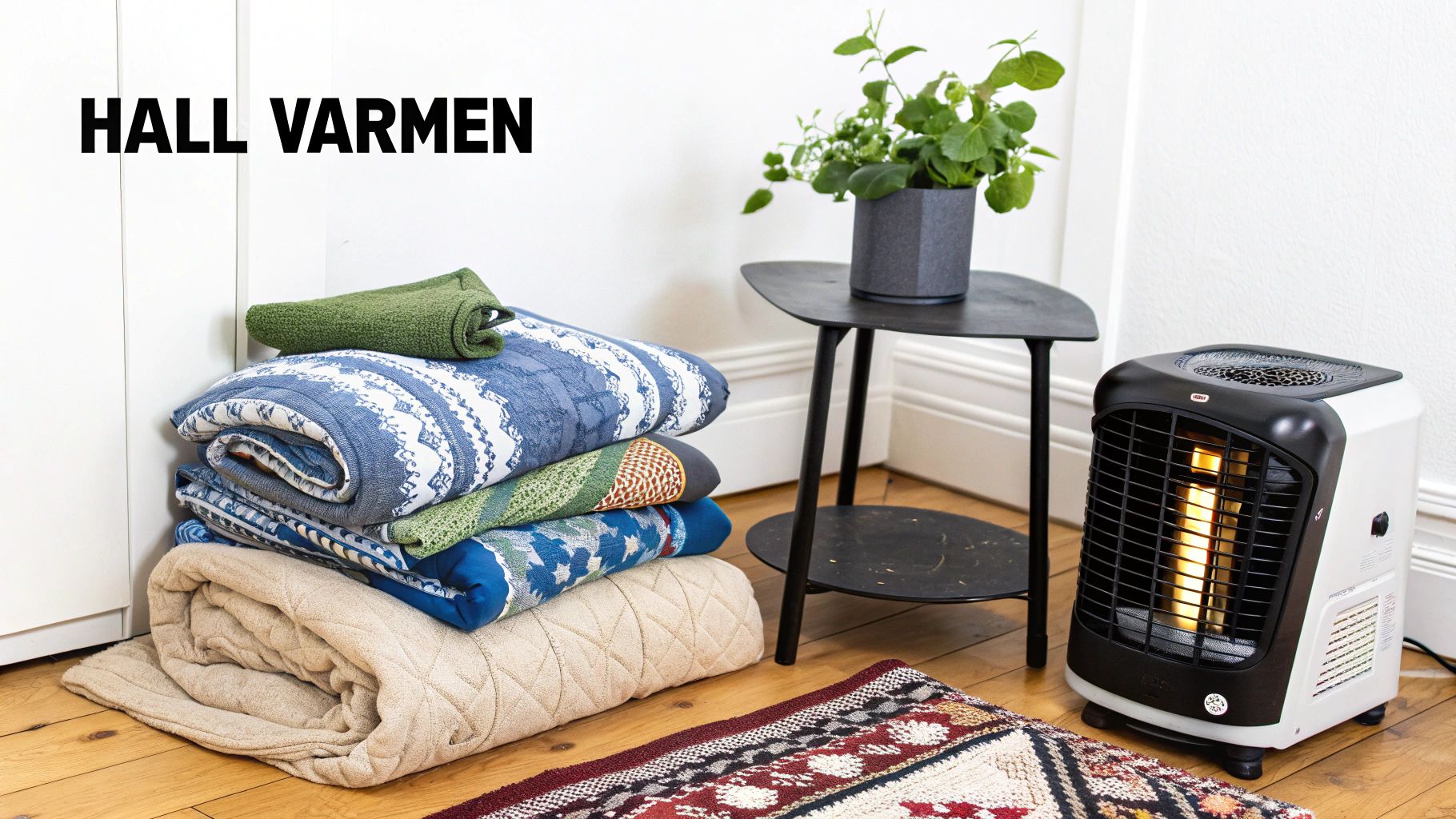
We only need to look at events like Storm Alfrida in 2019 to understand how crucial individual preparedness is. Thousands of households were left without power in freezing cold, which served as a brutal reminder that alternative heat and light sources are not a luxury, but an absolute necessity. You can read more about the lessons learned from that event in the Red Cross report on Alfrida.
Create a "heat island" in your home
When the heat from the radiators disappears, there is no point in trying to keep the whole house or apartment warm. Instead, focus on creating a "heat island" in a single room. Choose a smaller room, preferably one without large windows, where the whole family can gather.
Then, use everything you have to insulate the room and retain the heat that you and any heat sources generate:
- Cover the floors: Cold floors cool down a room incredibly fast. Spread out all the rugs, blankets, and duvets you can find on the floor to insulate.
- Insulate windows and doors: Hang thick blankets or duvets over the windows. Seal all gaps around doors and windows with towels, clothes, or tape to stop cold drafts.
- Dress in layers: Use the classic layering principle, ideally with wool closest to the body. Don't forget a hat, gloves, and warm socks – it makes a huge difference, even indoors.
By concentrating in a small space, your own body heat alone can actually raise the temperature by several degrees.
Think of it as building a small fort indoors. It’s about blocking out the cold and maximizing the heat you already have. Every small action, from an extra rug on the floor to a towel in a door gap, contributes to the whole.
Alternative heat sources – safety first
To get extra warmth, there are several good options, but safety must always come first. Improper use can lead to both fire and life-threatening carbon monoxide poisoning.
A LPG heater or paraffin heater is very efficient but requires constant good ventilation. This means you must have a window slightly ajar to ensure fresh air gets in. Never leave a heater unattended and make sure you have working smoke detectors and a carbon monoxide alarm in the room.
Let there be light without a power socket
Darkness is not just impractical; it can be disorienting and significantly lower morale. Candles and tealights provide both light and a hint of warmth, but they are an obvious fire hazard that must be handled with extreme caution.
A much better and safer choice is battery-powered light sources. A headlamp is invaluable because it frees up your hands. Perfect for cooking, rummaging through your emergency kit, or helping the children. Supplement with flashlights and perhaps a camping lantern that can light up an entire room. A crank radio with a built-in flashlight is also a smart, multifunctional tool.
Want to know more about smart lighting solutions? Then read our guide on choosing the right battery-powered LED lamp.
Get information when the internet and mobile networks are down
Suddenly, it’s silent. The power is out, the mobile towers have gone dark, and your usual link to the outside world is completely gone. In such a situation, the ability to receive accurate information from the authorities is not just a comfort – it’s crucial for making the right decisions.
Without a connection, the good old-fashioned radio becomes your most important device. It is through Sveriges Radio P4, the official emergency channel, that Important Public Announcements (VMA) and other critical societal information are broadcast.
The radio is your lifeline
To ensure you can actually listen when it matters, your emergency kit must contain a radio that is not dependent on a wall socket. A regular battery radio works, of course, but a crank radio (wind-up radio) is by far the safest bet. That way, you don't have to worry about batteries running out. A few minutes of cranking gives you enough power to listen to the latest news.
Modern crank radios are often true multi-tools. They usually feature a built-in flashlight, a small solar panel, and often a USB port where you can emergency-charge your phone using muscle power. A smart investment, plain and simple. If you want to dive into different models, read our detailed guide on choosing the right crank radio for your needs.
When information is scarce, rumors and misinformation spread like wildfire. Having a reliable channel directly to the authorities via P4 is the best vaccine against uncertainty and poor decisions.
Plan for the silence
When technology fails, we must fall back on basic, analog plans. What do you do if family members are in different locations when something happens and phones aren't working?
Sit down and make a simple but crystal-clear communication plan. It should include:
- Two meeting points: One right outside the home (e.g., at a specific neighbor's) and one a bit further away in the local area (a square, a school) if you cannot return home.
- An out-of-town contact person: Agree on a relative or friend in another city that everyone can try to reach. Sometimes it’s actually easier to get a long-distance call through than a local one when networks are overloaded.
- A physical phone list: Write down the most important numbers on a piece of paper. Laminate it. Your phone's contact list is useless with a dead battery.
Secure your most important papers
Imagine the scenario: you have to leave home, fast. Do you know where ID documents, insurance policies, property deeds, and other irreplaceable documents are located?
Gather physical copies of the most critical papers in a waterproof bag or folder. Passports, driver's licenses, birth certificates, and insurance documents are an obvious start. Having everything gathered in one place saves incredibly valuable time and reduces stress in an already pressured situation.
Hygiene and first aid when it really counts
When the most basic things, like running water and toilets, stop working, good hygiene suddenly becomes a matter of survival. It’s easy to forget, but dirt and poor sanitation can quickly lead to illness. And that is exactly what you want to avoid in an already stressful situation.
Therefore, a smart plan for hygiene and a well-stocked first aid kit are two of the most critical parts of your emergency kit.
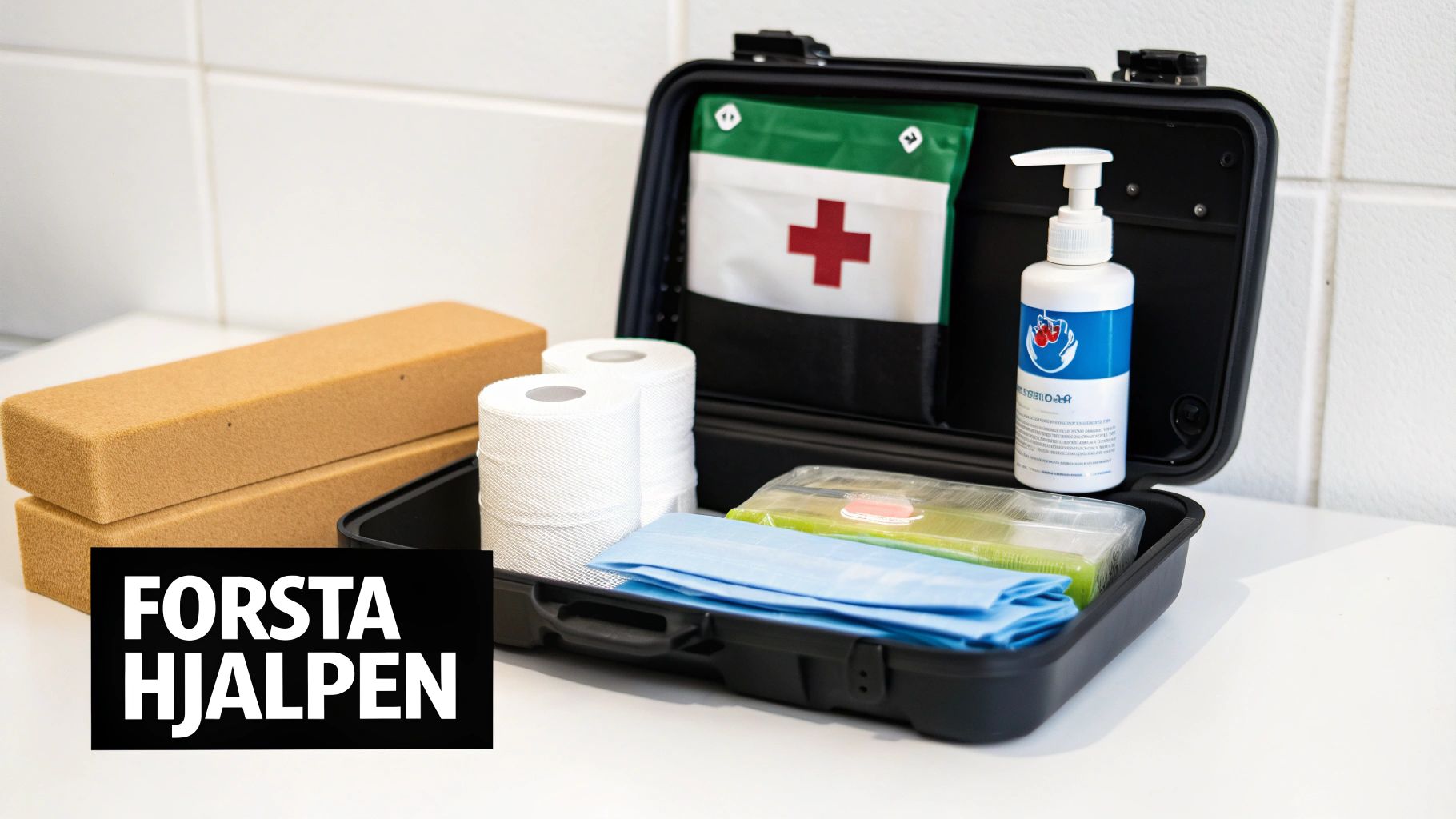
Staying clean without tap water requires some ingenuity. Wet wipes quickly become worth their weight in gold for washing up. Hand sanitizer is another must-have to keep hands clean, especially before handling food and after using the toilet. A small bottle of disinfectant is also perfect for cleaning surfaces.
Practical solutions for sanitation
Perhaps the biggest practical challenge is using the toilet. But the solution doesn't have to be complicated. You can create a simple emergency toilet with a sturdy bucket lined with a heavy-duty trash bag.
To manage odors and bacteria, you can sprinkle a little cat litter, sawdust, or dry soil after each use. Just remember to seal the bags tightly and store the waste well away from where you live, eat, and collect water.
Managing basic hygiene and sanitation is about much more than comfort. It is one of the best ways to prevent disease and keep both body and mind in check during a crisis.
Assemble a first aid kit that actually works
A ready-made kit from the pharmacy is an okay start, but your emergency kit deserves something better. Think beyond just bandaids and prepare for situations that are a bit more demanding.
A truly good first aid kit should include:
- Wound care: A generous supply of bandages in various sizes, sterile compresses, wound cleanser, surgical tape, and a pressure dressing to stop major bleeding.
- Tools: A small pair of scissors and a good pair of tweezers for removing splinters are indispensable. A few safety pins are also smart to have.
- Specific issues: Don't forget blister pads, cooling gel for burns, and an elastic bandage in case someone sprains an ankle.
Also, make sure to pack painkillers and fever reducers, such as paracetamol or ibuprofen. Oral rehydration salts are another cheap insurance policy, especially in the event of stomach flu.
Medications – your personal lifeline
One of the most critical points is access to personal, prescription medications. During a crisis, pharmacies may be closed or their shelves may be completely empty. Deliveries simply don't work as usual.
Therefore, ensure you always have an extra buffer at home. Talk to your doctor and explain the situation; often it’s possible to get an extra month's supply prescribed specifically for emergency preparedness. Store the medications in your emergency kit along with a copy of the prescriptions. This is a small step that can make all the difference if the crisis is prolonged.
Common questions and mistakes with emergency kits
Assembling your first emergency kit often raises a lot of questions. That’s perfectly natural. Here we go through some of the most common concerns and mistakes, so you can feel confident that your home preparedness is both smart and functional.
A classic mistake is simply ordering a pre-made kit without thinking about your family's own unique needs. An emergency kit is not a "one size fits all" solution. Do you have small children, pets, or someone in the family who needs special medication? Then the content must be adapted.
Another common trap is packing the kit, putting it away in a storage room, and then completely forgetting about it. Preparedness is a perishable skill. A really good emergency kit requires some care and regular maintenance so that it can actually be relied upon when it truly matters.
How big does the kit need to be and where should it be kept?
The size of your emergency kit depends entirely on how many people are in your household and what your needs are. A good start is to get one or two sturdy plastic bins with tight-fitting lids that are easy to carry. Remember that water is usually stored separately in larger containers.
Store the kit in a cool, dark, and easily accessible place. A closet on the ground floor or a dry storage room works perfectly. Try to avoid places with an obvious risk of flooding, like a damp cellar. The most important thing is that everyone in the family knows exactly where it is.
Don't forget the mental aspect. An emergency kit is just as much about having a plan and feeling in control as it is about the gear inside it. Knowing what to do is at least as important as having the right equipment.
How often should I check and replace the contents?
Perform a thorough review at least once a year. Set a reminder in your calendar right now so it gets done. During the review, check the expiration dates on all food and medications and ensure batteries still have a charge.
A smart trick to avoid wasting food is to actively rotate your stock. Take a canned item from the emergency kit for dinner and buy a new one the next time you shop. This way, you keep the food fresh and ensure nothing expires.
While you're at it, take the opportunity to consider if the family's situation has changed. Have you gotten a dog? Do you need new medications, diapers, or maybe baby food?
Do I really need an emergency kit in an apartment?
Absolutely. As a city dweller, you are often even more dependent on everything in society functioning. A power outage immediately takes out the stove, the elevator, and card terminals in shops. Water can disappear from the tap, and a high-rise building can quickly turn into a rather isolated place.
Your emergency kit is your personal insurance for managing those first, critical days. A camping stove, for example, suddenly becomes invaluable since you rarely have access to a wood stove or a private grill area in the courtyard. Your preparedness in the apartment is vital for your security.
A well-thought-out emergency kit gives you the peace of mind to handle the unexpected. To supplement your equipment with reliable lighting, power banks, and other smart outdoor gear, visit ActionKing at https://actionking.se to see our wide range.


