

An emergency blanket is so much more than just a thin, crinkly piece of foil. Think of it as a personal thermos for your body—a small, lightweight package that can make a massive difference when it really counts. Its most vital job is to prevent hypothermia by reflecting your own body heat back to you.
Why an Emergency Blanket is Essential for Your Safety
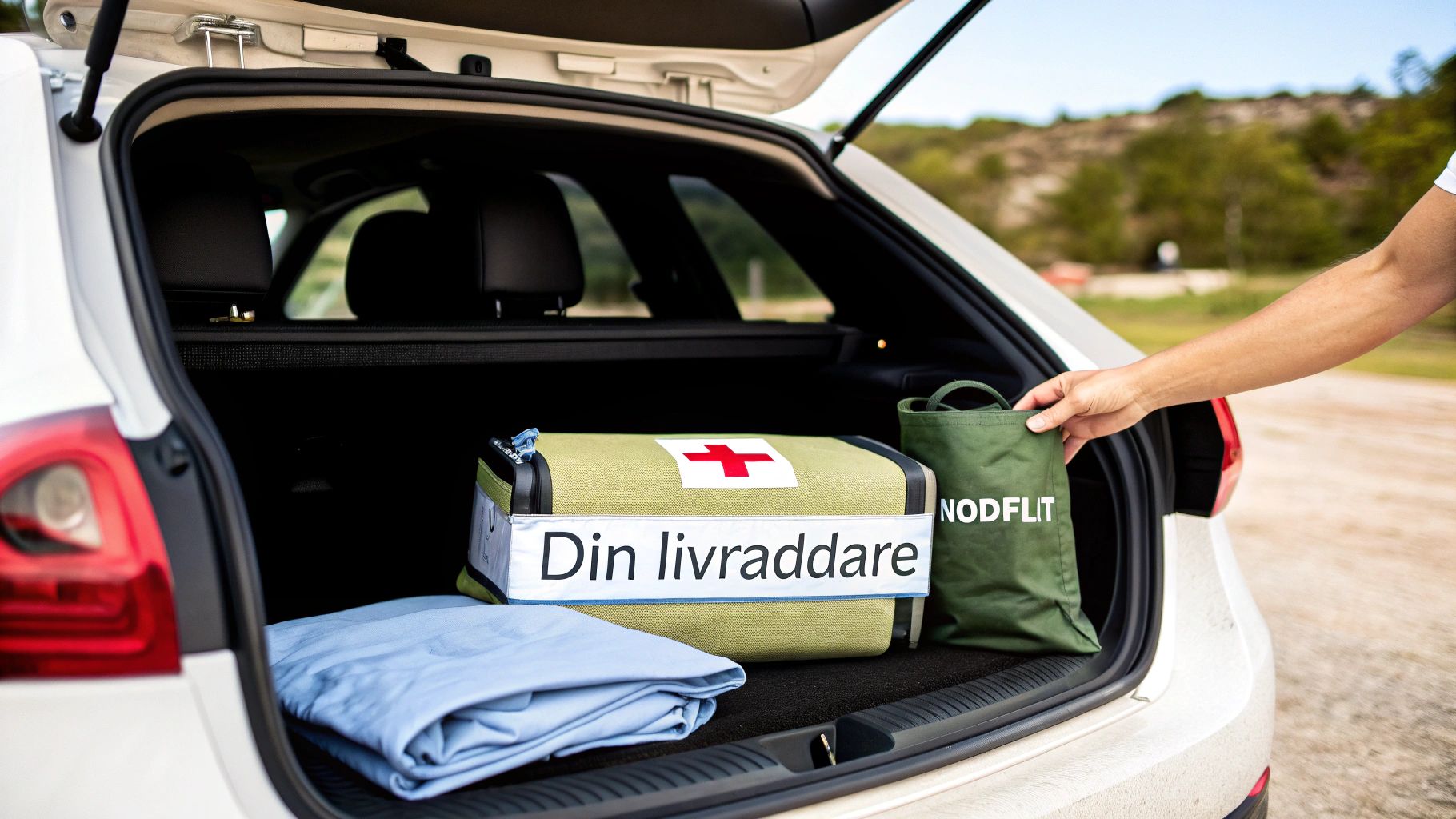
The emergency blanket is undoubtedly one of the smartest and most affordable tools you can have in your gear. It takes up almost no space at all, making it a natural choice for everything from first aid kits and car glove compartments to hiking backpacks and home emergency kits.
This simple item is also incredibly versatile. While its primary function is to retain heat when you're cold, it can actually be turned inside out to protect against overheating by reflecting away the sun's intense rays.
A Cornerstone of Swedish Preparedness
As early as the 1970s, the emergency blanket became a central part of equipment within Swedish healthcare and rescue services. Its use has increased significantly since then, and studies show that over 80 percent of all ambulances today carry them as standard equipment. That says a lot about how proven and important deaths are in emergency situations.
Understanding the fundamental role of the emergency blanket gives you a solid foundation to appreciate its true value. It is a small investment that can provide invaluable peace of mind when you need it most.
By combining the emergency blanket with other smart tools, such as a versatile survival shovel, you build a truly robust foundation for your personal safety and preparedness for the unexpected.
How an Emergency Blanket Actually Works
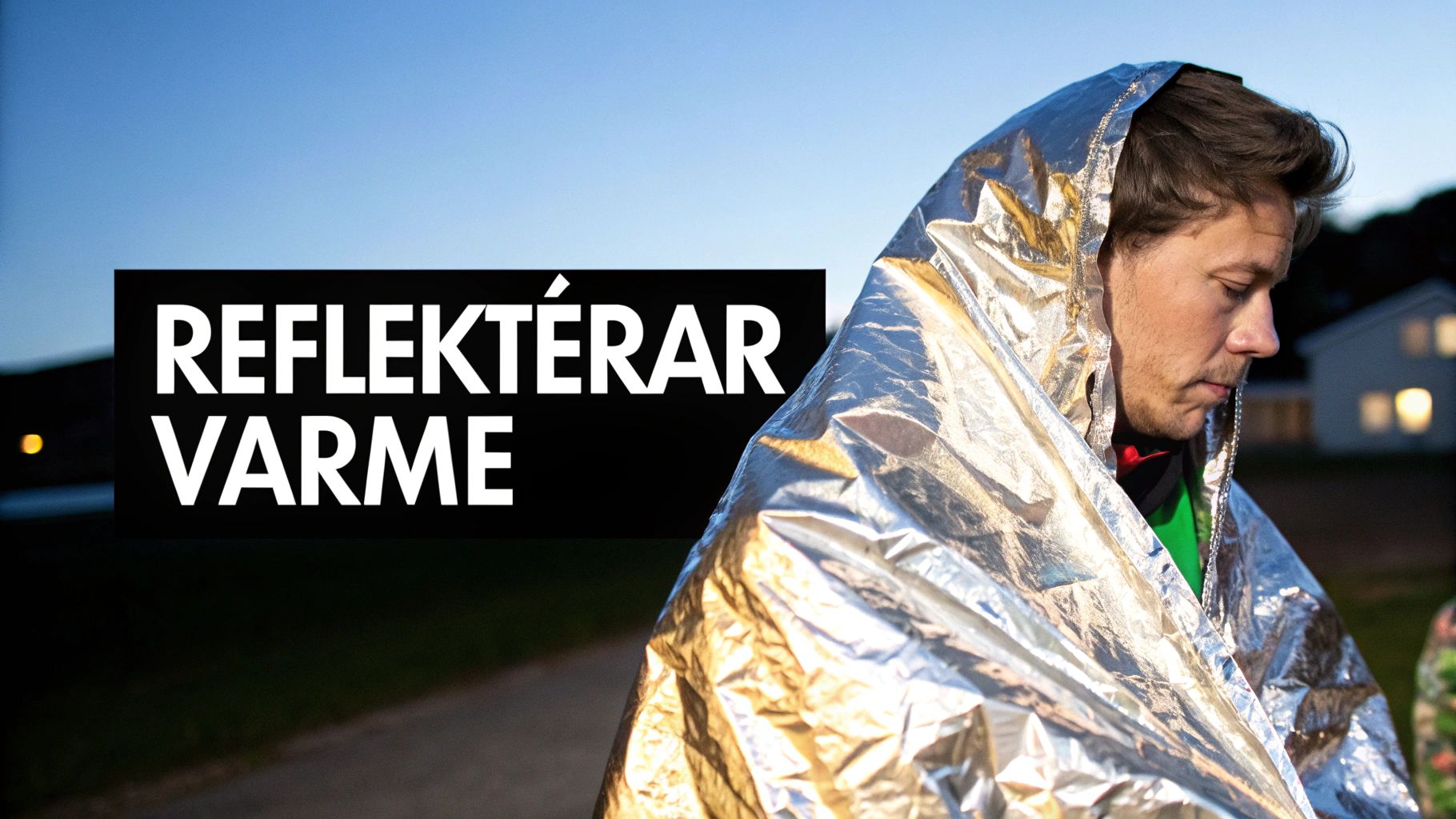
To grasp the concept of the emergency blanket, think of something as simple as a baked potato. You know how aluminum foil keeps it warm long after it leaves the oven? An emergency blanket does exactly the same for your body, but instead of trapping steam, it bounces back your own body heat.
Your body constantly leaks heat in several ways, but the absolute biggest culprit when it gets cold is thermal radiation. Just as the sun radiates heat, your body does too in the form of infrared energy. Without protection, this valuable heat disappears straight into the cold.
Three Ways the Body Gets Cold
To understand why the blanket is so effective, we must understand how we lose heat. This occurs mainly in three ways, and an emergency blanket is designed to stop the worst offenders.
- Thermal Radiation: This is the main culprit. Your body constantly emits heat as infrared radiation.
- Convection: When cold air or water sweeps over the skin and "steals" heat away. Think of wind on a cold day.
- Conduction: When you sit or lie on a cold surface, like wet ground, heat is conducted directly from you to the ground.
The emergency blanket is a specialist at tackling the first problem—thermal radiation. The material, a super-thin plastic film with a layer of aluminum, is engineered to reflect back up to 90% of the infrared radiation you emit. The mirror-like surface is the whole secret.
Silver Inward or Outward?
The eternal question: Should the silvery side face the body or face out? The answer is actually very simple and depends entirely on whether you want to retain heat or get rid of it.
To keep warm: Always the silvery, shiny side inward toward the body. This maximizes the reflection of your own body heat and traps it where it does the most good.
But if you are in a scorching climate and need protection from the sun, you do the exact opposite. Turn the silvery side outward to reflect away the sun's rays and create a cooling shade for yourself. Simple, right?
Smart Uses for Your Emergency Blanket
The true value of an emergency blanket is revealed when you stop seeing it as just a blanket and instead see it for what it truly is: an incredibly versatile tool. Its potential extends far beyond just wrapping up when the cold bites. Think of it as a Swiss Army knife in foil format.
It can become an improvised rain cover in seconds if you're caught in a downpour while hiking. String it up between a couple of trees and you have an effective roof that keeps both you and your gear dry. Lightweight, waterproof, and immediate protection.
From Ground Sheet to Life-Saving Signal
But it doesn't stop there. Here are some more smart ways to use your emergency blanket:
- Insulating Ground Sheet: Cold from the ground steals body heat quickly. Lay the blanket on the ground and sit or sleep on it. This creates a barrier that reflects your own heat upward and blocks the cold from below.
- Effective Sun Protection: On a scorching day, turn the reflective side outward and stake it up. Suddenly, you have a cooling shade that bounces away the sun's rays.
- Water Collector: By digging a small hole and covering it with the blanket, you can collect dew or condensation overnight. This is a technique that can be life-saving for obtaining emergency water.
The shiny surface also makes it a superb signaling tool. If you're lost, you can use it to flash towards helicopters or rescue teams. Combine it with a loud steel EDC whistle to maximize your chances of being spotted by signaling both visually and with sound.
Seeing your emergency blanket as a problem solver rather than just a warming object opens up a whole new world of possibilities, both on planned adventures and in unexpected emergencies.
Here in Sweden, this little tool has become a natural part of safety thinking in outdoor life. In skiing, concrete results have been observed; a 2017 study showed that an emergency blanket used during accidents could reduce the risk of severe hypothermia by up to 70 percent. It’s no wonder the Swedish Ski Association requires its leaders to carry one in their packs, which you can read more about in this in-depth article on rescue blankets.
Every scenario, from a sprained ankle on the mountain to a sudden change in weather, simply becomes more manageable with an emergency blanket at hand.
How to Choose the Right Emergency Blanket for Your Needs
Not all emergency blankets are created equal, and finding the right model is all about matching the blanket to your intended adventure. The choice usually stands between two main types: feather-light disposable blankets and more robust, reusable versions.
The classic, crinkly Mylar blanket is the gram-counter's best friend. It weighs practically nothing, takes up no space at all, and is perfect when every gram counts—like on a long mountain hike. However, it has a weakness: it is fragile. It tears easily and is practically impossible to fold back up neatly, making it a disposable option in practice.
The heavier-duty models, on the other hand, are built to last. They are often made of thicker materials, sometimes reinforced with scrim, and can be used over and over again. These are excellent to have in a car's emergency kit or in a home krislåda (emergency box), where weight and pack size are not as critical.
Find the Right Blanket for Your Adventure
How, where, and when do you plan to use your emergency blanket? That is the question you need to ask yourself. Is minimal weight more important than durability, or is a reliable and reusable blanket a better safety insurance for you?
To make the choice a bit easier, this decision tree can help you think through common scenarios.
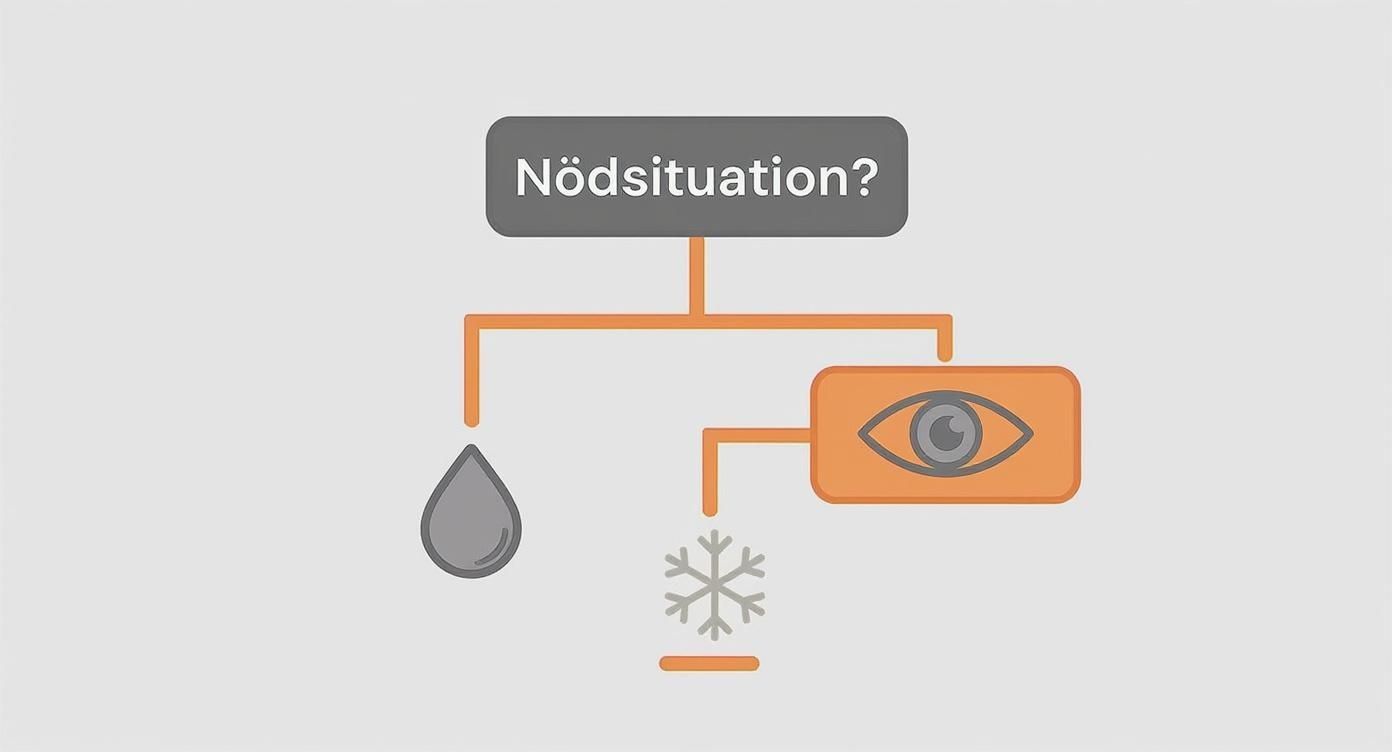
As you can see, different situations can require completely different features. Sometimes visibility is the most important factor, while in other cases, protection against ground cold can make all the difference.
Think of your emergency blanket as specialized insurance. You choose it based on the most likely risks you might face, whether it's a sudden blizzard on the mountain or a breakdown on a lonely winter road.
In an emergency, good lighting is just as vital as warmth. Be sure to supplement your gear with a reliable light source, like a camping lantern like the Nitecore LR70. It can not only provide ample light but also functions as a power bank to charge your phone. Combining the right protection with the right tools is the key to complete preparedness.
Comparison of Different Emergency Blankets
To provide a quick overview, we've put together a simple comparison table. Use it to quickly see the differences between the most common types of emergency blankets based on material, durability, weight, and recommended use.
| Feature | Standard Mylar Blanket (Disposable) | Reinforced Emergency Blanket (Reusable) | Emergency Sleeping Bag (Bivvy) |
|---|---|---|---|
| Material | Thin Mylar film | Thicker Mylar, often with weave reinforcement | Mylar-lined interior, durable exterior |
| Durability | Low, tears easily | High, withstands wear and tear | Very high, designed for multiple uses |
| Weight | < 60 g (extremely light) | 100-300 g (moderate) | 100-250 g (light to moderate) |
| Best suited for | Ultralight packing, racing, one-time use | Car emergency kits, home preparedness, camping | Planned overnight stay, extra protection in sleeping bag |
As the table shows, there is a blanket for every need. The ultralight Mylar blanket is unbeatable for the gram-counter, while the reinforced model and emergency sleeping bag offer a different level of security and durability for those willing to carry a little extra weight.
Integrating the Emergency Blanket into Your Home Preparedness
An emergency blanket is a quiet and often underrated hero in every well-planned krislåda (emergency box). Its true value is most apparent during a prolonged power outage in winter, when house temperatures can rapidly drop to dangerously low levels. Having a plan for exactly this is one of the cornerstones of modern home preparedness.
Imagine the heat suddenly vanishes. Using duct tape, you can attach emergency blankets over windows and doorways to create a smaller "heat room." This simple trick dramatically reduces heat loss and helps concentrate the warmth you already have into a smaller space where the family can gather.
How Many Emergency Blankets Do You Need?
A good rule of thumb is to have at least one emergency blanket per family member, plus a few extras for other smart purposes.
- Personal Protection: One blanket per person is the foundation, so everyone can wrap themselves up.
- Insulation: Have an additional 2–4 blankets ready to insulate windows or create that smaller, warm space in a larger room.
- In the Car: Ensure you have at least two blankets in every vehicle. A breakdown on a lonely, cold road can quickly become a dangerous situation without extra protection.
The fact that more people are considering home preparedness is clearly reflected in the statistics. The number of emergency blankets distributed to Swedish households increased by a full 40 percent between 2015 and 2020. At the same time, reported cases where the blanket was actually used in crises increased by 25 percent. If you want to understand the trend better, you can read more about preparedness trends in Sweden.
Make sure to store your emergency blankets so they are easily accessible. A krislåda in the hallway or garage allows you to act immediately when it really counts.
To be able to communicate during a long outage, it's also wise to have a plan. Supplement your emergency kit with battery-powered gadgets, and consider reliable options like a Motorola Walkie-Talkie T92 to stay in touch even when the mobile network is down. Including the emergency blanket in your planning is a simple and inexpensive step toward a much safer everyday life.
Frequently Asked Questions about Emergency Blankets
Even if you understand the basics, specific questions often arise when it's time to pack or use an emergency blanket. We've gathered the most common concerns here and provide straightforward, simple answers.
Think of this section as a quick guide that gives you the confidence to use your blanket correctly when it really matters.
Which side should face my body?
This is the most common question, and the answer is super simple. To keep warm, the silvery, shiny side should always face inward toward the body. It is designed to reflect back up to 90% of your body heat, which is the whole point of the blanket to prevent hypothermia.
Should you instead protect yourself from intense sun and heat? Then do the exact opposite. Turn the silver side outward to reflect away the sun's rays and create a cooler shade under the blanket.
Can I use my emergency blanket multiple times?
It depends entirely on the type you have. The most common, super-thin, and cheap Mylar blankets are built for a single emergency situation. They are incredibly difficult to fold back up and the thin material tears easily once used.
However, there are heavier-duty, reinforced models made to withstand more abuse and be repackable. Always check the product description to see what applies to your specific blanket.
A good rule of thumb: the standard blanket is a one-time insurance policy. A reinforced model is a reusable part of your permanent gear.
Is the material breathable?
No, definitely not. The material in an emergency blanket is completely sealed to be 100% wind and waterproof. That is one of its greatest strengths.
The downside is that your sweat can create condensation on the inside, which can make you wet and eventually chill you. To avoid this, ensure you never seal the blanket completely tight. Always leave a small opening, preferably at the top, so that moist air can be ventilated out.


